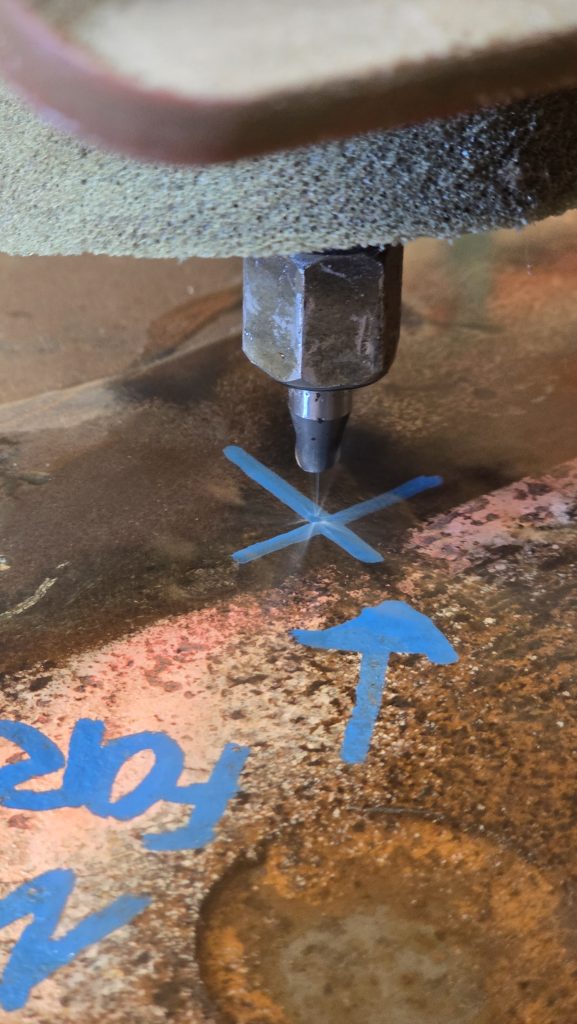
Why a torch-cut wear plate fails early
Abrasion-resistant plate gets its hardness from a controlled quench. Oxy and plasma put heat back into the edge. That band is a heat-affected zone: the hardness along the cut is no longer what the certificate says.
On a wear part the edge is where the abrasive stream hits first. A softened edge wears first.
Abrasive waterjet is a cold process. The hardness at the cut edge is the hardness you specified.
That is the practical reason to cut wear plate on a waterjet: no softened band, no torch distortion in thick plate, and no recast layer that makes a later drill or weld harder.
On mild steel brackets and general sheet, a heat-affected zone often does not matter. The process should follow the material.